Executive Summary for In-Flight Posture Decompression: Long-haul air travel forces the human body into sustained flexed postures within cramped aircraft seating, leading to severe shortening of hip flexors, compression of intervertebral discs, and chronic hypertonicity in the erector spinae and upper trapezius. Authentic Thai Massage reverses in-flight posture stiffness through assisted passive yoga stretching, joint mobilization, and sen line acupressure. By utilizing leverage-based traction to open contracted anterior muscle chains and decompress the lumbar and thoracic spine, Thai bodywork restores joint range of motion and quells somatic threat signals transmitted to the central nervous system. Integrating this physical realignment with fluid oil techniques restores natural postural balance and eliminates flight-induced physical stiffness for arriving travelers.
The Biomechanics of Mid-Air Seating Strain on the Musculoskeletal System
Sitting immobile for 8 to 15 hours in airplane cabins disrupts normal anatomical alignment. The physical geometry of standard aircraft seats forces the spine into a sustained “C-shape” posterior tilt, altering gravitational weight distribution across joints:
- Adaptive Shortening of Hip Flexors: Sustained 90-degree hip flexion causes the psoas major and iliacus muscles to contract and shorten. Upon standing after landing, these shortened muscles pull the pelvis forward, creating lower back strain.
- Intervertebral Disc Compression: Static sitting increases intradiscal pressure in the lumbar spine by up to 40% compared to standing. Lack of movement prevents fluid exchange across spinal discs, leaving them rigid and susceptible to inflammation.
- Anterior Shoulder Girdle Collapse: Forward arm positioning while using inflight entertainment screens shortens pectoralis minor fibers, pulling the shoulder blades forward and straining the upper back muscles.
To understand how physical structural realignment fits into a complete multi-step airport arrival recovery protocol, explore Long-Haul Flight Body Reset: Relieving Fluid Retention and Cabin Pressure Fatigue.
How Authentic Thai Massage Mechanically Reverses In-Flight Muscle Guarding
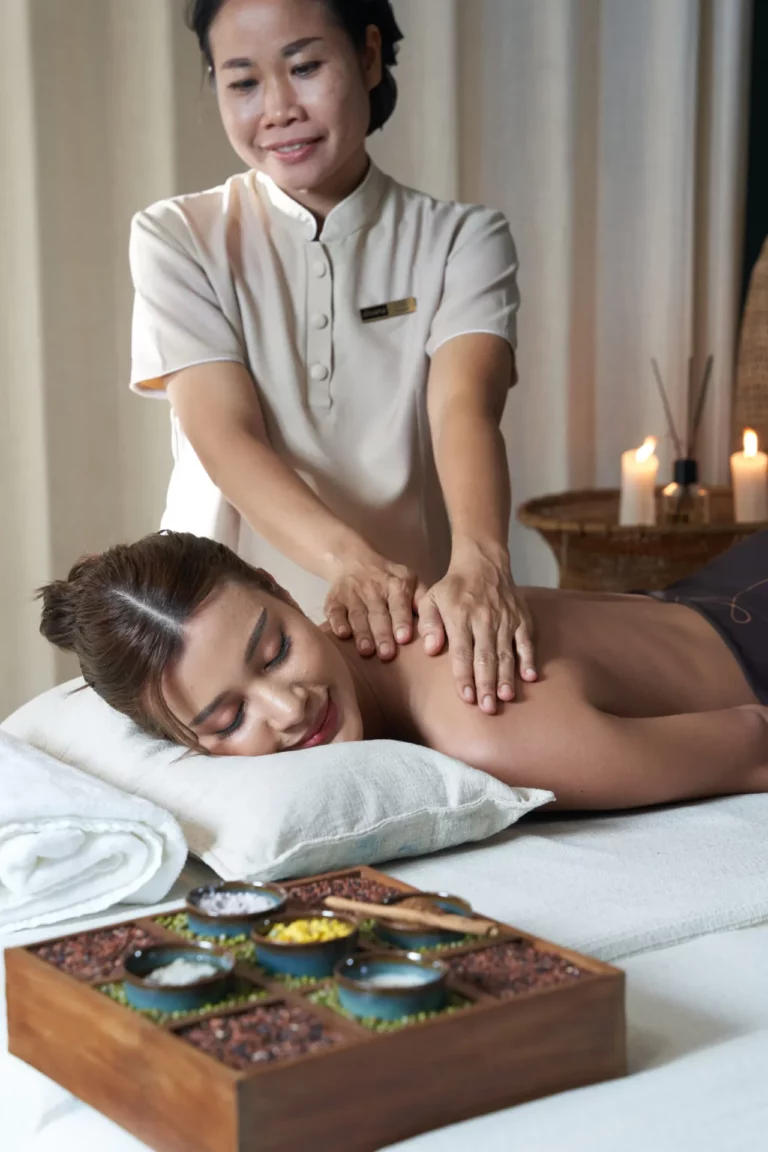
Traditional Thai bodywork utilizes leverage, fulcrum placements, and assisted stretching to lengthen deep fascial chains without requiring active muscular exertion from tired travelers.
1. Assisted Hip Extension and Psoas Lengthening
Therapists perform leverage-based hip extension movements to open shortened anterior hip structures. Guiding the leg backward into controlled extension stretches contracted psoas and rectus femoris fibers, relieving anterior pelvic tilt and lower back pressure.
2. Spinal Traction and Intervertebral Mobilization
Using knees, feet, or hands as fulcrums along the middle back, the therapist executes gentle arching and twisting maneuvers. This traction creates space between vertebrae, allowing dehydrated intervertebral discs to rehydrate and encouraging the spine to return to its natural s-curve.
3. Sen Line Acupressure along Somatic Neural Pathways
Deep thumb and palm pressure applied along the back and leg energy channels (Sen Sumana and Sen Kalathari) releases localized myofascial knots. This sustained pressure stimulates Golgi tendon organs, signaling overactive muscles to drop protective guarding patterns.
To explore how convenient transit access from Suvarnabhumi and Don Mueang airports makes post-flight recovery effortless, read Post-Flight Spa Workflows: Luxury Spa Bangkok Sanctuaries Easy to Access from Suvarnabhumi & Don Mueang.
Biomechanical Comparison: In-Flight Stiffness Release Techniques
| Posture Strain Parameter | Assisted Thai Stretching | Deep Tissue Swedish Massage | Self-Directed Hotel Stretching |
|---|---|---|---|
| 主要標的組織 | Joint Capsules & Fascial Chains | Superficial Musculature | Major Muscle Groups |
| 作用機序 | Passive Levered Yoga Traction | Localized Table Compression | Active Unassisted Muscle Contraction |
| Spinal Decompression | High (Multi-Directional Traction) | Low | Low to Moderate |
| Psoas & Hip Opening | Deep (Full Passive Extension) | Limited | Moderate |
| Traveler Physical Effort | Zero (Fully Assisted Recovery) | Zero | High (Requires Active Effort) |
よくある質問 (FAQ)
Q1: Is authentic thai massage too intense after a long, exhausting flight?
回答: Skilled therapists adjust leverage and pressure based on your fatigue level. Post-flight Thai bodywork emphasizes slow, rhythmic traction and gentle joint mobilization designed to soothe nervous system strain rather than cause discomfort.
Q2: Should I receive a Thai massage or an oil massage if my legs are swollen after flying?
回答: If you experience both severe joint stiffness and leg swelling, a combined ritual is recommended. Gentle Thai stretching decompresses stiff joints, while an oil massage flushes trapped fluid. Learn how essential oils restore leg circulation in Cabin Pressure Recovery: How Aromatherapy Oil Massage Restores Venous Circulation After Long Flights.
Realign Your Body and Relieve Flight Strain at Divana Spa
Overcoming mid-air posture stiffness is essential for enjoying your time in Thailand. Restoring natural joint alignment shortly after landing releases physical tension and restores physical vitality.
Signature Airport Arrival Recovery at Divana Spa
Decompress from long-haul flights with specialized posture realignment rituals at Divana Spa. Our arrival recovery programs blend restorative 本格的なタイマッサージ stretches with soothing aromatherapy oil massage techniques to drain leg swelling and release spinal tension. Located in tranquil garden sanctuaries near central Bangkok transit corridors, Divana Spa provides a serene space for arrival renewal.
お問い合わせ to check same-day availability and reserve your post-flight posture session with Divana Spa.
お問い合わせ